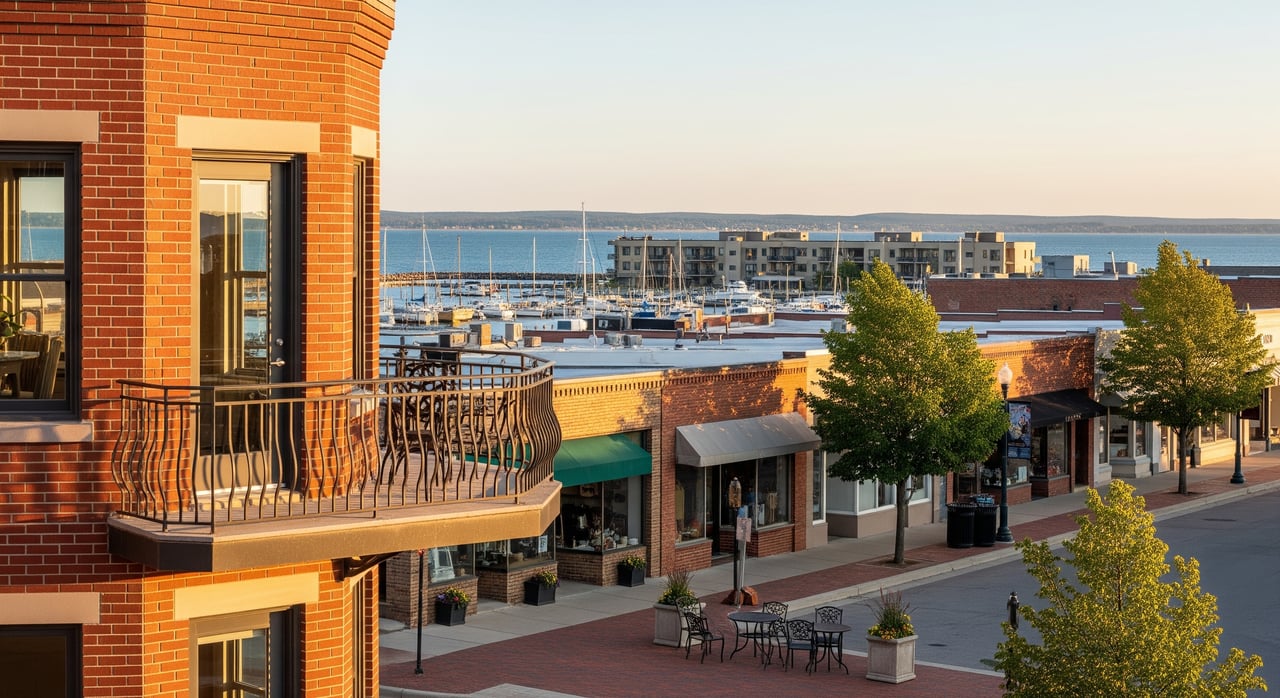
Picture this: you step out your front door to the smell of fresh coffee, stroll to the bay for a sunrise walk, and decide between tacos, a farm-to-table bistro, or a cozy wine bar that evening. If you want a walkable lifestyle with water, culture, and convenience, downtown Traverse City delivers. In this guide, you’ll get a feel for day-to-day life, housing options, outdoor access, seasonality, and what to consider before you buy. Let’s dive in.
Downtown at a glance
Downtown Traverse City centers on West and East Front Street along the West Arm of Grand Traverse Bay and the Boardman River. The district blends restaurants, cafés, shops, galleries, and small offices with in-town housing. You can handle most daily needs within a few blocks. The compact footprint is a major reason people choose to live here.
A day in the life, season by season
Summer energy
Summer brings the city to life with outdoor dining, beach days, boating, and evening strolls. Pedestrian traffic and tourism pick up, and many businesses extend hours. Major events and festivals stack the calendar, so you’ll feel the buzz from morning to night.
Fall and spring rhythm
Shoulder seasons offer the best of both worlds. Weekends stay lively, while weekdays feel more relaxed. You’ll still find great hiking and biking, plus easy reservations at your favorite restaurants.
Winter pace
Winter is calmer but far from dull. Downtown restaurants, cultural venues, and winter recreation keep a steady rhythm. Snow and cold shape routines, so plan for bundled walks, good boots, and thoughtful parking or transit choices.
Waterfront and outdoor access
Clinch Park and the public waterfront sit right on the edge of downtown, so beach time and sunset views are built into your routine. The Boardman River and Boardman Lake add paddling, fishing, and peaceful riverside walks. The TART trail network links you to neighborhoods, regional trails, and lake loops for easy biking and running without getting in the car.
Food, coffee, and culture
Downtown’s food scene is a year-round draw, with independent restaurants, bakeries, specialty coffee, breweries, and wine tasting rooms. Many spots highlight local farms and producers. Small theaters, galleries, artisan shops, and live music venues create a lively cultural calendar that feels big for a city this size.
Housing options and who they fit
Condos and lofts
Condos and loft-style units put you closest to the action. Expect low-maintenance living, walkability, and sometimes building amenities. Trade-offs include HOA fees and limited private outdoor space. These often suit young professionals, downsizers, and second-home owners seeking convenience.
Historic single-family homes nearby
Just beyond the busiest blocks, you’ll find Victorian, Craftsman, and bungalow-era homes. You get character, larger lots, and proximity to parks and schools. Plan for older systems and maintenance, and know that layouts may feel different from new builds. Buyers who value architectural details and established streets tend to love these homes.
Townhomes and new infill
Newer infill townhomes offer modern finishes and easy upkeep. Inventory is limited, but these can check the boxes for buyers who want contemporary design within strolling distance of dining and the bay. HOAs are common and simplify exterior care.
Apartments and rental flats
Above-storefront flats and small multi-unit buildings serve year-round renters and seasonal workers. If you are testing the downtown lifestyle before buying, a rental can be a great first step.
Second-home and vacation units
Seasonal buyers often choose condos or smaller homes for summer use and occasional rental income. Check current city rules and HOA policies before assuming short-term rental potential. Downtown carries an urban premium, with condos and smaller units often the most approachable entry points.
Getting around and parking
Walk, bike, and transit
The core is pedestrian and bike friendly, with riverwalks and lanes connecting key destinations. The regional non-motorized trail network makes two-wheeled errands easy. Local bus service offers city routes that help in winter or on rainy days.
Driving and parking
On-street parking and municipal lots are available but can be tight during summer weekends and festival periods. Some buildings include on-site or permit options. If you rely on a car, consider where you will park before you buy.
Regional access
Cherry Capital Airport offers commercial flights to major hubs, which is helpful for second-home owners and frequent travelers. U.S. and state highways connect you to nearby peninsulas, lakes, and regional destinations.
Events, arts, and local rhythm
Downtown is a hub for signature events, including the National Cherry Festival and the Traverse City Film Festival. Regular farmers markets, art walks, live music nights, and holiday parades add steady energy. Expect a lively summer and a comfortable baseline of culture in the quieter months.
Practical considerations before you buy
Market timing
Demand tends to rise in spring and summer when tourism and second-home interest peak. Late fall and winter can be quieter. For current stats like median sale price or days on market, consult local MLS data or a trusted local broker.
Zoning, HOAs, and short‑term rentals
Downtown parcels may allow mixed-use and varying residential densities. HOAs are common in condo and townhome communities. Short-term rental rules can change, so review city ordinances and HOA documents to confirm what is allowed before you write an offer.
Condition and older homes
If you’re eyeing a historic home, plan inspections that focus on electrical, plumbing, foundation, and HVAC systems. Budget for maintenance and updates over time. A pre-inspection strategy can be helpful if you plan to sell.
Waterfront and flood considerations
Properties on the bay or along the river can require special insurance and shoreline considerations. Review FEMA flood maps and city guidelines for setbacks and shoreline management. Factor these items into both budget and long-term care.
Taxes, utilities, and carrying costs
Property taxes vary by municipality and millage levies. HOA fees may apply to condo and townhome communities. Within city limits, you can expect city water, sewer, and typical municipal services, including snow removal on main routes.
Investment and rental demand
Summer tourism supports short-term rental demand. Seasonality and regulations impact returns, so model conservative assumptions. Year-round rental demand exists for service workers and residents, with vacancy and rent levels that can shift by season.
Who loves living here
Downtown attracts a mix of young professionals, retirees and empty nesters, second-home owners, and service workers. Families with school-age children are present, though many choose adjacent residential streets with more yard space. If you value walkability, cultural life, and quick access to the water, the core is a strong match.
Is downtown right for you? A quick checklist
- You want to walk to coffee, dinner, and the bay.
- You prefer low-maintenance living and can trade a big yard for trails and parks.
- You are comfortable with seasonal energy and summer crowds.
- You have a plan for parking, especially during events.
- You are open to condos, lofts, or smaller homes with character.
Ready to explore in person?
If downtown Traverse City is on your short list, let’s pair your lifestyle with the right home type, building, and block. From staging and design to relocation support and neighborhood orientation, you’ll have guidance at every step. Connect with Hillary Voight to tour options, understand rules and carrying costs, and plan your move with confidence. Find Happiness at Home. Schedule a Personalized Consultation.
FAQs
Is downtown Traverse City walkable year-round?
- Yes, the core is compact and walkable, though winter snow and ice can affect comfort and some businesses reduce hours in colder months.
How close are beaches, marinas, and trails to downtown?
- Clinch Park and the public waterfront sit next to downtown, with river access nearby and TART trail connections for biking and walking.
What should I know about parking if I live downtown?
- Parking is available on streets and in municipal lots, but spaces can be limited during summer weekends and festivals; some buildings or HOAs offer dedicated or permit options.
Are there grocery stores and daily services downtown?
- You’ll find coffee, specialty food, and small groceries in the core; larger supermarkets and big-box options are a short drive outside downtown.
What types of homes are most common downtown?
- You’ll see condos and lofts in or near the core, historic single-family homes on adjacent streets, plus some townhomes, rentals, and seasonal units.
How do short‑term rental rules affect buying downtown?
- Short-term rental rules vary and can change; review current city ordinances and HOA policies before assuming rental income is allowed.
What is the mix of full-time and seasonal residents?
- Downtown includes both full-time residents and second-home owners, with a higher visitor presence in summer.