Choosing a Lake Leelanau waterfront lot can feel simple at first glance. You see the view, imagine the dock, and start picturing summer on the water. But on Lake Leelanau, the details behind the view matter just as much as the view itself, and understanding them early can help you avoid expensive surprises later. If you want to buy with more confidence, this guide will walk you through what to compare before you fall in love with a parcel. Let’s dive in.
Why Lake Leelanau Lots Vary So Much
Lake Leelanau is not a one-size-fits-all waterfront market. Leelanau County has limited land and a remarkable amount of shoreline, with 100 miles of shoreline, 33 inland lakes, and 5 islands within just 348 square miles. That scarcity means waterfront lots are inherently limited, and small differences from one parcel to the next can have a big impact on how the property lives.
Lake Leelanau is also split into two distinct basins, North Lake Leelanau and South Lake Leelanau, connected by the Narrows. The Narrows is regulated as slow-no-wake water, which can affect boating flow, traffic patterns, and the overall feel of nearby frontage. Two listings may both say “Lake Leelanau waterfront,” but their day-to-day experience can be very different depending on exactly where they sit.
Start With the Frontage
When you compare lots, exact frontage should be one of your first filters. A parcel with broader, more usable frontage may offer more flexibility for dock placement, outdoor living, and how the home sits on the site. On a lake where buildable land is limited, frontage is not just a number on a listing sheet. It shapes how the property functions.
You will also want to confirm whether the property offers direct frontage or shared access. A lot with direct waterfront ownership and a lot with shared lake access can deliver very different ownership experiences, even if the water view looks similar in photos. This is one of the most important lot-to-lot comparisons serious buyers should make.
Compare North Lake, South Lake, and the Narrows
Location on the lake matters beyond the mailing address. Because Lake Leelanau is divided into North and South Lake, each area can feel distinct in terms of boating patterns, views, and shoreline conditions. Proximity to the Narrows adds another layer, since it is a designated slow-no-wake corridor.
If you picture active boating and quick movement across open water, one basin may fit your lifestyle better than another. If you prefer a calmer, slower-moving setting, a parcel nearer the Narrows may feel more aligned with how you want to use the property. The key is to match the lot to your real routine, not just your first impression.
Let Shoreline Character Guide the Search
On Lake Leelanau, shoreline character should often matter more than the future house size. According to the DNR, South Lake Leelanau is a 5,370-acre lake with a maximum depth of 62 feet and an average depth of 23 feet. Its shoreline composition was estimated at 80% upland and 20% wetland, with shoal substrates of 80% sand, 10% gravel, and 10% muck.
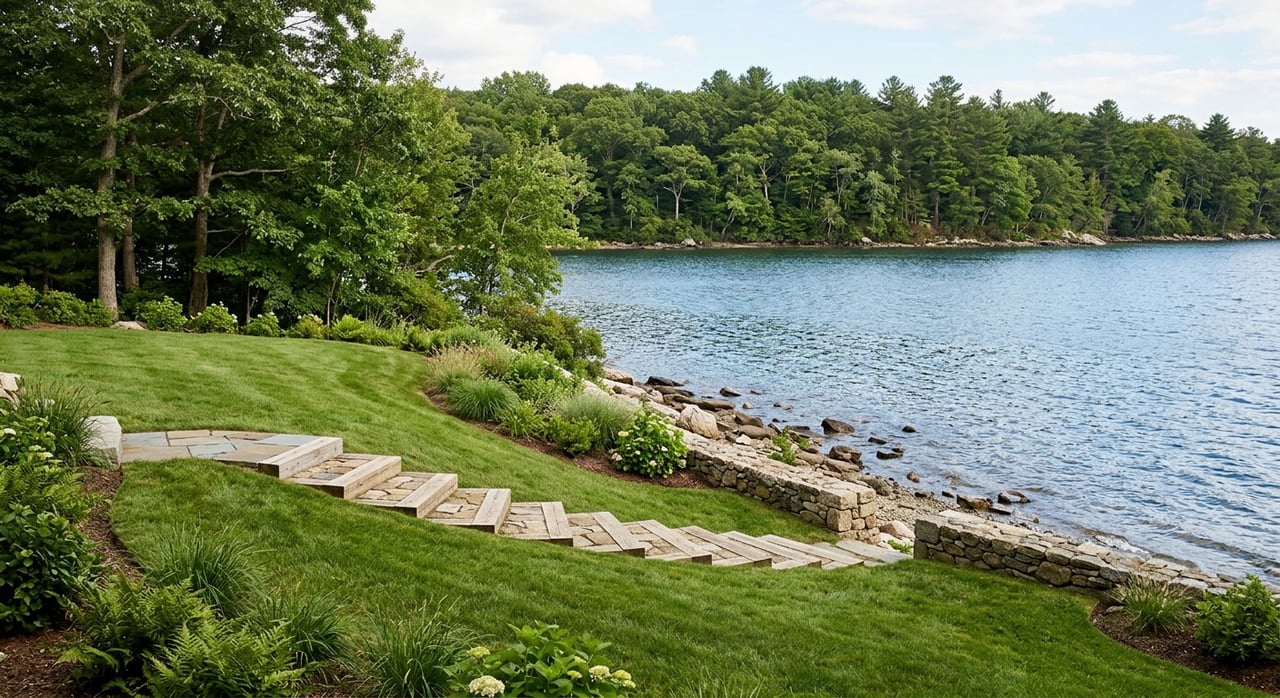
That matters because not every waterfront edge will feel the same underfoot or function the same way over time. Some lots may have firmer upland frontage and more usable lawn area near the water. Others may have wetter shoreline edges or bottom conditions that affect swimming, dock use, and maintenance expectations.
When you tour vacant land, try to look beyond the broad view across the lake. Pay attention to slope, firmness, shoreline texture, and how much truly usable space exists between the buildable area and the water. Those details often shape your long-term enjoyment more than a conceptual floor plan ever will.
Understand Water Levels and Seasonal Changes
Lake Leelanau’s water level is regulated, and that has practical implications for lot selection. The DNR reports that the lake’s elevation must be maintained at 589.21 feet above sea level from April 15 through November 15, then lowered by 12 inches from November 15 through April 15. Elmwood Township also defines the ordinary high water mark at 589.21 feet.
For you as a buyer, this matters in several ways. Seasonal water levels can affect dock height, shoreline exposure, and how the lot looks and feels in summer compared with winter. A parcel that seems ideal during one season may present a different picture during another, so it is smart to evaluate how the frontage functions across the full year.
Ask Early About Dock and Shoreline Feasibility
A beautiful lot does not automatically mean simple waterfront improvements. Shoreline projects at or below the ordinary high water mark require a permit, according to EGLE. If you are considering a vacant lot and already imagining shoreline changes, it is important to treat that work as a regulated issue, not just a landscaping project.
EGLE also warns that seawalls and steep riprap can create added turbidity, bottomland scouring, impacts on adjacent properties, and habitat loss. When erosion control is needed, natural shoreline or bioengineered approaches are generally recommended. In practical terms, that means your ideal shoreline look and your actual permitted options may not be the same thing.
Dock feasibility should also be part of your review. A smart lot comparison includes whether a dock is realistic at current water levels and whether the shoreline conditions support the type of access you want. This is especially important if your plans include frequent boating, swimming, or hosting on the water.
Factor In Launch Access and Boating Traffic
Public access can influence both convenience and privacy. The DNR lists four public boating access sites on Lake Leelanau: Lake Leelanau North with 8 parking spaces, West with 5, East with 21, and The Narrows with 33. Access sites around the lake and Leelanau River range from carry-in points to hard-surfaced launch ramps.
For some buyers, proximity to a launch can be a plus because it makes getting guests or additional watercraft on the lake more convenient. For others, being near a busy launch area may mean more traffic than they want. The Narrows, in particular, can bring more boating activity because it functions as the connection point between the two basins.
This is one of those quality-of-life details that is easy to overlook online. A lot can look peaceful in photos but feel much busier in person depending on nearby access patterns. If possible, compare properties at different times of day and on different days of the week.
Treat Vacant Land Like a Different Purchase
Buying a waterfront lot is not the same as buying an existing cottage. For parcels without municipal wastewater service, the Benzie-Leelanau District Health Department says a vacant-land site survey is the first step. That evaluation looks at soil type and permeability, depth to seasonal high-water table, slope, separation from wells and surface waters, runoff patterns, easements and rights-of-way, utilities, and neighboring development.
This is where many buyers discover that the prettiest lot is not always the easiest lot to build on. A property may have a stunning setting but still present challenges related to septic placement, drainage, or the shape of the building envelope. Doing this work upfront can help you understand what the lot truly supports before you move too far into design plans.
Check Septic, Well, and Buildable Area Together
On a waterfront lot, the building envelope is everything. The county sanitary code requires septic tanks to be at least 50 feet from wells and 50 feet from surface water or floodplain elevation. On a narrow parcel, those spacing rules can quickly shrink the area where a home, driveway, well, and septic field can realistically fit.
That is why lot selection should never focus on frontage alone. You want to know whether the parcel still leaves enough practical room for the home design you actually want after all required separations and site constraints are applied. A lot can appear generous from the water and still be surprisingly tight once the legal and physical requirements are mapped out.
Review Township Rules Before You Commit
Local zoning can tighten the picture even more. In Centerville Township, Lake Leelanau waterfront parcels fall within a waterfront overlay district that applies to land within 100 feet of the shoreline. The ordinance uses a 75-foot waterfront or front-yard setback from the ordinary high water mark, requires a 50-foot natural vegetation strip, and generally prohibits roadways and driveways in that setback.
The same ordinance also includes frontage and dock rules for shared lake-access easements. That means two similar-looking parcels may offer very different flexibility depending on township rules and how access is structured. Elmwood Township, for example, defines Lake Leelanau’s ordinary high water mark at 589.21 feet, which is another important measurement to verify when reviewing site conditions.
For buyers, the takeaway is simple. Always review township-specific requirements before assuming a lot can accommodate your preferred home placement, access route, or shoreline plan.
A Simple Lot Comparison Checklist
When you compare Lake Leelanau waterfront lots, focus on the issues that affect long-term use, not just first impressions.
- Direct frontage versus shared access
- North Lake, South Lake, or proximity to the Narrows
- Shoreline type, slope, and bottom conditions
- Dock feasibility at current water levels
- Septic and well viability
- Setbacks, vegetation-strip rules, and local zoning limits
- Whether the remaining building envelope fits your intended home design
- Nearby launch access and likely boating traffic
A strong waterfront purchase usually comes down to how well these pieces work together. The best lot is not always the one with the most dramatic photos. It is the one that supports the lifestyle you want with fewer compromises later.
If you are exploring Lake Leelanau waterfront land, having a local guide can make the process far more efficient. Hillary Voight helps buyers evaluate northern Michigan properties with a practical, place-based perspective so you can choose a lot that fits both your vision and the realities of the site.
FAQs
What should you look for in a Lake Leelanau waterfront lot?
- Compare frontage, basin location, shoreline type, dock feasibility, septic and well viability, and township rules that affect the building envelope.
Does shoreline type matter on Lake Leelanau vacant land?
- Yes. Shoreline conditions can range from firmer upland edges to wetter areas, and bottom conditions may include sand, gravel, or muck, which can affect use and maintenance.
Why does the ordinary high water mark matter on Lake Leelanau?
- It affects setbacks, shoreline regulation, dock planning, and any work proposed at or below that level.
Are shoreline improvements regulated on Lake Leelanau?
- Yes. EGLE states that shoreline projects at or below the ordinary high water mark require a permit.
Why is a site survey important for Lake Leelanau vacant land?
- A vacant-land site survey helps evaluate soils, slope, water table, runoff, utilities, easements, and whether septic and well placement are workable on the parcel.
Can two Lake Leelanau lots with similar views have very different value?
- Yes. Usability can vary significantly based on frontage, access type, shoreline conditions, zoning, and whether the lot supports your intended home design.