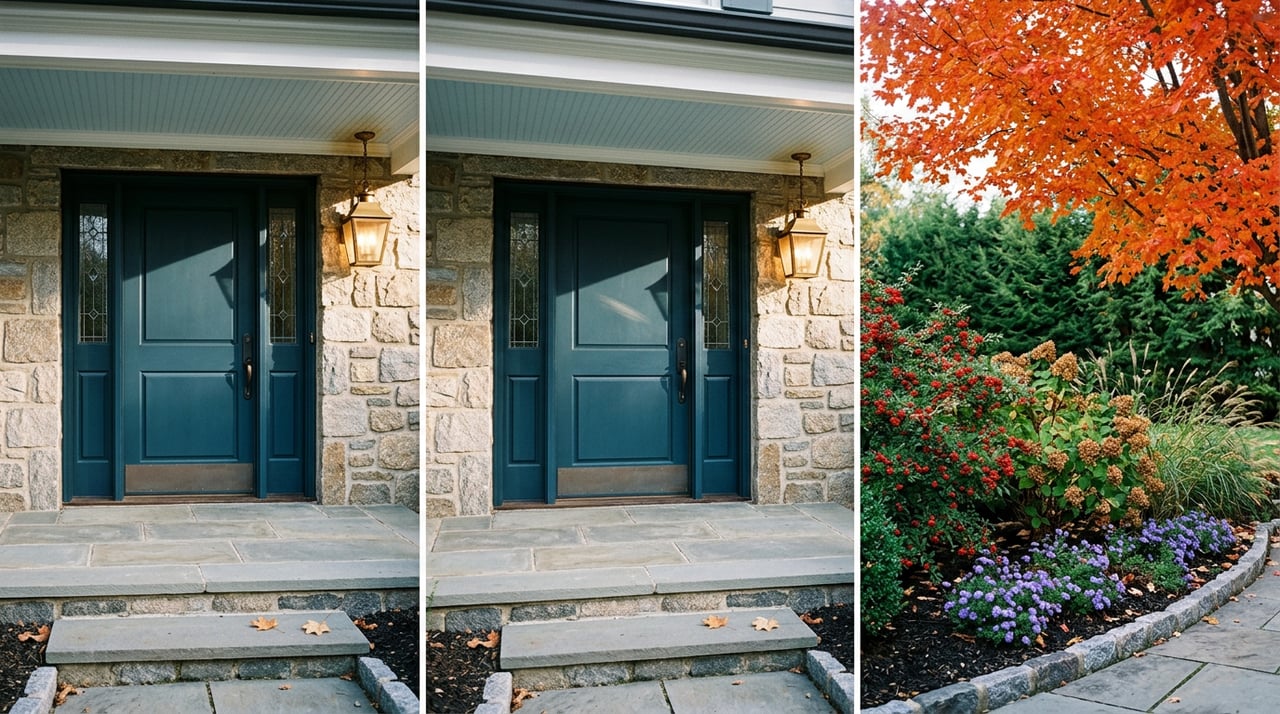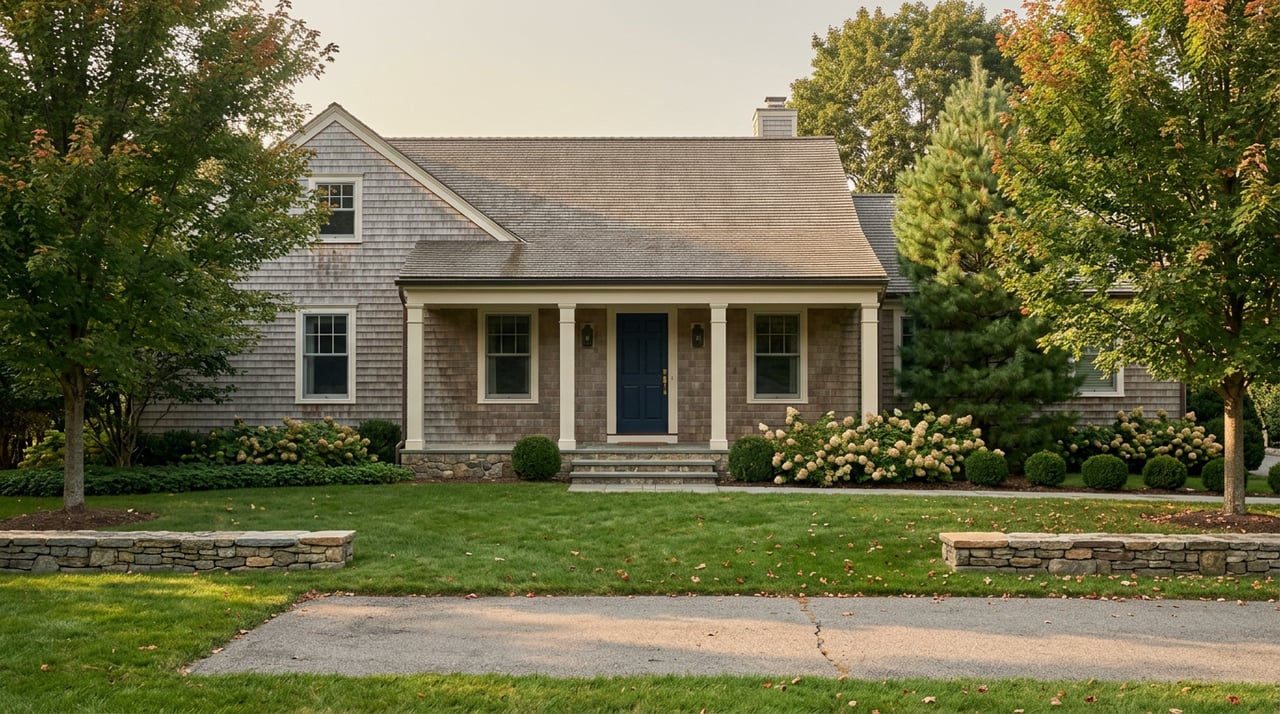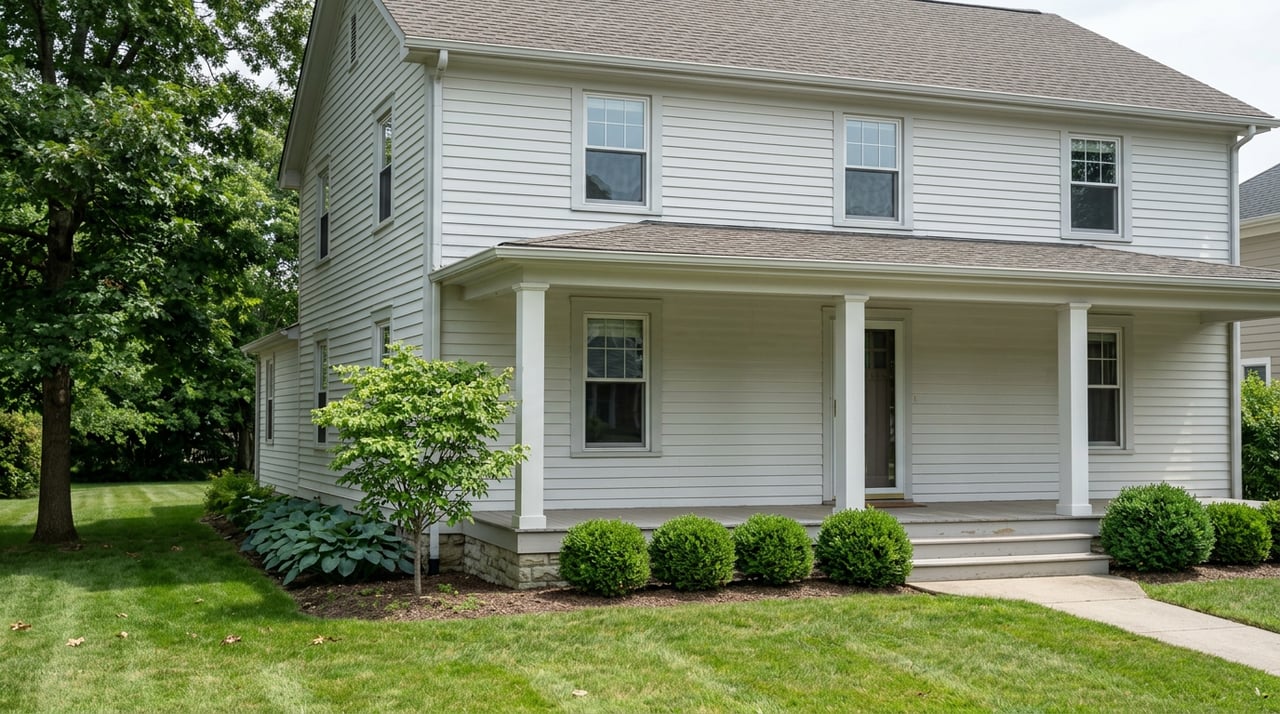
Two houses closed in Central this spring within a few blocks of each other. One went under contract in 21 days. The other sat for 210. Both count toward the same neighborhood median, which is exactly the problem with treating that median as a single story.
Add the fact that Central's R-2 lots can now legally hold up to four dwelling units instead of two, and you'd expect the neighborhood to be mid-transformation: infill construction, a wave of split-lot listings, prices easing as supply catches up. If you're comparing Central to Old Towne or Slabtown while deciding where to buy, that's the story the zoning headline seems to promise. It's not what the data or the ordinance actually shows.
The Fine Print the Headlines Skipped
In June 2025, Traverse City commissioners voted 5-2 to let R-2 properties, mixed-density residential parcels that make up a meaningful share of Central, go from two dwelling units to four. Commissioners Heather Shaw and Jackie Anderson opposed it. Local coverage framed it as a housing-density breakthrough, and in a city where officials have said they're short roughly 2,000 dwelling units, split roughly evenly between rental and owner-occupied, that framing made sense.
City Planning Director Shawn Winter was more specific about what the rule actually does. Setbacks, height limits, impervious surface limits, and lot width and area all stay exactly as they were. Winter put it plainly: the change "would not permit something to be built in terms of scale and placement other than what is allowed today." The only thing that moves is how many separate living spaces you're allowed to carve out of the same building footprint.
That distinction matters more than the vote count. A rule that changes configuration, not scale, only helps you if your existing structure and lot already have room to configure differently.
What Actually Has to Stay the Same
For a typical Central property, here's what the reform did not touch:
- Setback requirements from property lines
- Maximum building height
- Impervious surface limits (how much of the lot can be paved, roofed, or otherwise built over)
- Minimum lot width and area
If your Central lot is a standard-depth parcel with a single-family footprint built decades ago, none of those constraints loosened. What changed is that, in theory, you could reconfigure the interior into four legal units instead of two, using two duplex buildings, a triplex with an accessory dwelling unit, or a quadplex, as the ordinance language spells out. In practice, that requires separate entrances, separate utility hookups, fire-rated walls between units, and often a full interior rebuild. For a house that was never designed to be split, that's not a zoning unlock. It's a renovation project with a zoning ceiling raised just high enough to make it legal, not necessarily affordable.
One Neighborhood, Three Different Medians
Ask three different sources what a home in Central actually sells for and you'll get three different answers, and the gap between them tells you more than any single number does.
| Snapshot | Window | Reported figure | What it's built from |
|---|---|---|---|
| July 2025 | Point-in-time, 6 active listings | $529,000 median / $605,546 average | Listings spanned $465,000 to $985,000 |
| Trailing 12 months (through late August 2026) | Rolling year | $485,000 median, down 19% from the prior 12 months | Homes sold in 48 days on average |
| March 2026 closings | Single month | $607,399 median | 46-day average, but individual closings ranged from 21 days to 210 days |
That $120,000-plus swing between the trailing 12-month figure and the March 2026 snapshot isn't a data error. It's what happens in a neighborhood where only a handful of homes close in any given window. When six or eight sales make up your sample, one $985,000 listing or one home that sits for seven months before finding the right buyer can move the median by tens of thousands of dollars. Add a zoning change that, so far, hasn't produced a meaningfully larger pool of listings, and you get a neighborhood where the "market" is really a rotating cast of a dozen or so houses at any given time.
For comparison, Old Towne's median sat at $366,000 in February 2026 with a 36-day average, a full $240,000 below Central's March figure. Slabtown, the neighborhood most often compared to Central for walkability and in-town character, has typically priced higher still, commonly in the mid-$500,000s to mid-$600,000s. Central sits in the middle of that spread, close to downtown and Boardman Lake, but without Slabtown's bay-adjacent premium or Old Towne's larger stock of smaller, less expensive homes.
The Only Lots the Rule Actually Frees Up
If the fourplex rule isn't reshaping typical Central houses, who does it help?
The properties positioned to use it are the exceptions, not the rule: a corner lot with unused yard area within the existing impervious surface allowance, a property already informally divided into a rental unit and an owner's unit that just needs the paperwork to catch up to reality, or a genuine teardown where a builder is starting from a blank slate and can design for four units from the ground up within the same height and setback envelope a single-family home would have used anyway. Central's listings already reflect a small number of these: duplexes marketed as investment opportunities, and older homes with a separate entrance and a second kitchen that a buyer could formalize into a legal second unit rather than build from scratch.
Worth saying clearly, because it comes up in almost every conversation about this ordinance: none of it touches short-term rentals. When the city expanded housing flexibility in its 2023 zoning package, city officials were explicit that "nothing that the city commission approved allows more short term rentals in the residential neighborhoods." The four-unit rule is no different. It's about year-round housing variety, not vacation rental capacity.
What This Means If You're Shopping Central Right Now
Traverse City has been loosening these rules in increments for over a decade, and the pace is worth knowing before you assume this round changes anything fast. Accessory dwelling units became legal in the city in 2015, with an annual cap of 10 permits in single-family neighborhoods. That cap rose to 15 in 2018. By October 2023, the city dropped the cap entirely as part of a broader package that also allowed duplexes by right across R-1a and R-1b districts, which together make up close to 83 percent of the city's residential land, and reduced minimum lot sizes to as little as 4,000 square feet. Each of those steps took years between approval and any visible change in what's actually for sale.
The four-unit R-2 rule is the newest link in that same chain. If you're comparing Central to Old Towne or Slabtown on the assumption that Central is about to get materially more affordable because of new supply, the timeline so far doesn't support that. What you're actually buying into is a walkable, established, in-town neighborhood, with Hannah Park and the Boardman Lake Trail a short walk from most streets, the TART Trail connecting out toward downtown, Central Grade School inside the neighborhood boundary, and a housing stock that includes some of the oldest residences in the city. Those are the reasons Central holds value. The zoning rule is a long-term tool for a small number of specific lots, not a lever that's about to move the whole neighborhood's price floor.
If you're evaluating a specific Central property and want to know whether it's one of the exceptions, the questions worth asking before you write an offer are: is the parcel actually zoned R-2 or is it R-1a/b, does the lot have unused impervious surface capacity, and has anyone already tested whether the existing structure could legally support a second entrance without triggering a full rebuild. Those answers matter far more than the citywide headline.
Frequently Asked Questions
Does the new rule mean my neighbor's house could become a short-term rental fourplex? No. City officials were explicit that this change does not expand short-term rental use in residential neighborhoods. It governs year-round housing configuration only.
Does this apply to every lot in Central? No. It applies specifically to parcels zoned R-2. Central includes a mix of zoning designations, so a property's actual zoning matters more than its neighborhood name.
Should I expect Central home prices to drop because of this? Not on any near-term timeline. Past zoning changes in the city, including the ADU cap increases in 2018 and its elimination in 2023, took years to show up as visible new supply. The physical footprint limits on most existing Central lots haven't changed, which limits how much this particular rule can do on its own.
If you're weighing Central against Old Towne, Slabtown, or another in-town Traverse City neighborhood, and want to know what a specific property's zoning actually allows before you make an offer, that's exactly the kind of question worth a conversation before you're up against a deadline. Found Realty Co can walk through the parcel-specific details with you. Find Happiness at Home. Schedule a personalized consultation.